

Surrogacy in US and Trump II

President Trump was inaugurated yesterday, 20 January 2025, for his second non-consecutive term and in a sweep of executive orders he also revoked birthright citizenship for future-born children of anyone whose parents do not have settled immigration rights, i.e. are in the US illegally or only as visitors. Does this affect children born to foreign intended parents in US surrogacy?
What does the order say?
The right of people born on US soil to US citizenship is found in the Fourteenth Amendment to the US constitution. Trump’s order seems to hang on the meaning of “subject to the jurisdiction” of the US. Trump tries to exclude two categories of persons:
“(1) when that person’s mother was unlawfully present in the United States and the person’s father was not a United States citizen or lawful permanent resident at the time of said person’s birth,” and
“(2) when that person’s mother’s presence in the United States was lawful but temporary, and the person’s father was not a United States citizen or lawful permanent resident at the time of said person’s birth.”
This would, therefore, mean that children born to parents who are in the US as visitors (as most intended parents are) are excluded from citizenship.
However, the definitions may help IPs because:
“(a) “Mother” means the immediate female biological progenitor.
(b) “Father” means the immediate male biological progenitor.”
This while the surrogate may not be the legal mother due to a pre-birth or post-birth order, she might still be classed as the mother under the order. The definition is not clear because most children born to surrogates have an egg-donor and a surrogate, thus two female progenitors. Could “immediate” refer to the surrogate and exclude the egg-donor? This would in particular be important if the foreign intended mother’s eggs are used in the surrogacy.
Will this order hold up?
The order has been made and is likely to be challenged in the courts. The US Supreme Court seems to have decided the issue as long ago as 1898 in a case called United States v. Wong Kim Ark where a man born in San Francisco to Chinese immigrants was held to be a US Citizen. The court held that “subject to the jurisdiction” excluded only those who were born to foreign rulers or diplomats, born on foreign public ships, or born to enemy forces engaged in hostile occupation of the country’s territory (as well as native tribes, which was later dealt with by legislation).
What should IPs do?
The order takes effect for births 30 days after it was made, so 19 February 2025. Some precautions are probably wise, including:
- Getting confirmation of the surrogate’s citizenship including a certified copy of her passport or other proof of citizenship;
- Including in the contract with the surrogate that she confirms her citizenship and will cooperate with any requirements by authorities to prove that so that the IPs can apply for US citizenship for the child;
- Including a similar clause in the egg-donor agreement in case “immediate female biological progenitor” is given a wider interpretation;
- Obtaining proof that the surrogate gave birth and is therefore the “immediate female biological progenitor”, such as hospital records;
- Asking the US passport office local to the place of birth in advance what evidence they may require, e.g. from the surrogate;
- Get advice from your US attorney and see if the pre- or post-birth order should be re-worded to include that for the purposes of any application for US citizenship the surrogate is declared as the “immediate female biological progenitor”.
More will be known in weeks to come. In the meantime, advice from a specialist US attorney is vital.
Posted in Children International | Tagged children International Surrogacy
Surrogacy in US and Trump
Trump has pledged to overturn the right of children born in the US to automatic US citizenship. What does this mean for surrogacy in the US?
Trump changed the majorities in the US Supreme Court in his first term and when previously it was balanced, there is now a conservative 6:3 majority. In Dobbs v. Jackson Women’s Health Organization (2022) this led to the overturning of Rowe v Wade, the case which legalised abortion across the US. As a result there is now a hotchpotch of state laws some banning abortion outright and some which might even apply to foetuses in the lab. Intended Parents (IPs) in surrogacy journeys in the US will need to consider the state where their surrogate lives carefully to ensure that she has access to full reproductive rights in case of a miscarriage or other event when continuing the pregnancy is not the preferred option of all involved.
Before his re-election Trump pledged to overturn the US constitutional right of children born on US soil to US citizenship. This is not expected to be retrospective and could simply be done by presidential decree or a new law which restricts the birthright to children born on US soil where at least one parent is a US citizen or legally resident in the US.
This would probably also affect international surrogacy journeys in the US because in most states the IPs are the legal parents from birth, whether through a pre-birth or post-birth order. Many IPs currently rely on their child born in the US through surrogacy being able to get a US passport swiftly and travel home with it before taking sometimes a long legal journey to sort out their parental status and therefore the child’s citizenship by descent back home. In the UK this is by way of a parental order.
While the new law is not expected to apply retroactively, it could come in just before transfer or even while the surrogate is already pregnant and apply to the newborn.
If you have started your surrogacy journey in the US, this could apply to you. I suggest all foreign IPs should get advice from immigration solicitors back home to ensure they don’t get stuck in the US with neither the US nor their country’s authorities giving the child a passport (at all or soon).
As far as I understand, UK citizen IPs can get travel documents although parentage is not recognised in family law but the application is sent back to the UK and it can take weeks or months before the child gets British a passport. This could mean the family will have to stay in the US, adding to their overall costs. It would help if the surrogate was unmarried because then at least there is legal parentage through a genetic father (and the surrogate’s spouse is not automatically the second parent). British IPs could also consider any new law carefully and see if it applies to them or if they could apply for a type of visa to the US which would give their child US citizenship automatically (rather than travel on the visa waiver programme) if they are entitled to it.
While any such law might be unconstitutional, this is ultimately a matter for the courts and the US Supreme Court. Legal arguments do not help IPs who are told by the US Passport Agency that they cannot get a US passport for their newborn. So unless the courts suspend the new law pending a constitutional challenge, this could take years to sort out and meanwhile many new families could spend an unwelcome costly few months in the US waiting for a British (or other) passport.
Posted in Children | Tagged children International Surrogacy
Lesbian Couple’s Children in a Gulf State Subject to English Court
A recent case (S (Children: Parentage and Jurisdiction) [2023] EWCA Civ 897) shows two interesting points, which are of far wider significance on lesbian paternity and international family law.
Two women had been civil partners in England and one of them gave birth to (it seems) four children. When the relationship broke down, the gestational mother moved to a Gulf State, they dissolved their civil partnership and both married other women. First the non-birth mother saw the children regularly, but the gestational mother then seems to have stopped that. The oldest child was in boarding school in England.
Two questions were decided by the Court of Appeal:
- Were both women legal parents of the children?
- Could the English Court decide on issues child arrangements?
While the oldest child had been born before a law change, the younger children were born after the Human Fertilisation and Embryology Act 2008 s. 42 came into force, which provides:
(1) If at the time of the placing in her of the embryo or the sperm and eggs or of her artificial insemination, W was a party to a civil partnership with another woman or a marriage with another woman, then […] the other party to the civil partnership or marriage is to be treated as a parent of the child unless it is shown that she did not consent to the placing in W of the embryo or the sperm and eggs or to her artificial insemination (as the case may be).

The appeal court decided that consent did not have to be a “deliberate exercise of choice”, but rather the presence or absence of consent may be inferred from the circumstances. Consent does not have to be “in writing or oral or unarticulated” and while “acquiescence …is not the same thing as consent”, “but the court will be careful to distinguish acquiescence from consent that has not been expressly stated.”
“The big picture here was that these were parties to a civil partnership who wanted children and created a family”; the court had accepted that the non-birth mother wanted children and “The judge’s conclusion that [the non-birth mother] merely acquiesced sits uneasily in the context of a relationship between cohabiting civil partners.”
This is significant as it gives more certainty to same-sex families and their children. The norm in cohabiting married couples or civil partners must be that if one of the women has a child, the other one is a legal parent of the child.
The second issue was whether the English Court could decide on the issues about the children. In this case the Gulf State in which (at least) the younger children lived did not recognise same-sex relationships and did not recognise parental rights of non-birth mothers. So they would not decide on any application by the non-birth mother for time with the children. The basic rule is that the courts where the children live have the power to make such decisions. This is also the basis in the 1996 Hague Convention. However, if no country has jurisdiction under those rules, the English court also have the power to make decisions in connection with continuing divorce and civil partnership dissolution proceedings in England. The question was whether this applied in the case where the civil partnership dissolution had been concluded more than 5 years earlier.
The court followed another recent case (Re T (Children) (Jurisdiction: Matrimonial Proceedings) [2023] EWCA Civ 285) and found that the English courts can continue to decide on child arrangements until they are 18 if the divorce or civil partnership dissolution as in England and Wales. This allows the English courts to look at child arrangements where the divorce or civil partnership dissolution was in England provided the country where the children live (broadly) is not a member of the 1996 Hague Convention. In cases where this could happen, that may be a good reason to have the divorce in England rather than elsewhere.
The practical effect for this non-birth mother is not entirely clear from the report. I suppose with the oldest son in boarding school in England the birth mother continues to travel to England and does not want to fall foul of a court order so will comply with an order made in England.
Posted in Children Gay & Lesbian International | Tagged children International Jurisdiction Lesbian mothers
AI is no use for legal research
I tried out AI to do legal research and here is the result.
I was looking at child maintenance the other day and the way the Child Maintenance Service (CMS) calculates child maintenance in specific cases. That is set out in Schedule 1 to the Child Support Act 1991. So far so good.
This has been amended several times and the government helpfully has the amended latest version on its legislation website. However, there is a paragraph that provides that some people do not have to pay child maintenance at all:
5 The rate payable is nil if the non-resident parent—
(a) is of a prescribed description; or
(b) has a gross weekly income of below £7.
How do I find out what “prescribed description” means? This is set out in secondary legislation, also called statutory instruments or SIs. They are also online on the government legislation website, but they are not cross-referenced in the act which they define further, nor are they updated. So an SI may have been amended by another SI, but the older SI will appear on the government website in its original wording. So unless I get a learned book on the topic (and even then finding this is not straightforward), I would have to traipse through dozens of SIs to find the definition. I did find the answer (by chance) in regulation 45 of the Child Support Maintenance Calculation Regulations 2012 SI 2012 No. 2677: prisoners, children and some students and residents in care homes etc.
I wondered whether AI could get there quicker. Since all this information is publicly online and it is just a question of reading all of it, cross-referencing it and finding the most recent version if there is more than one, it does not really take intelligence to find it, just the ability to read a lot of information fast and put it in date order.
I started with bing.com AI. I asked:
Hi. I’m looking for the statutory instrument which sets out the “prescribed purposes” for paragraph 5 of schedule 1 of the child support act 1991.
It told me:
I’m sorry, but I couldn’t find the specific statutory instrument that sets out the “prescribed purposes” for paragraph 5 of schedule 1 of the Child Support Act 1991. The information available on the legislation’s website1 does not provide the exact details you’re looking for. You may want to consult a legal expert or a law library for more specific information.

Polite but wrong. I tried Gemini from Google next:
Unfortunately, there isn’t a single statutory instrument that directly defines the “prescribed purposes” for paragraph 5 of Schedule 1 of the Child Support Act 1991. Here’s why:
-
- No specific instrument: Paragraph 5 itself doesn’t mention any specific statutory instrument for prescribed purposes. Instead, it references regulations made by the Secretary of State. This means the definition of “prescribed purposes” depends on the specific regulations in force at the time.
- Dynamic regulations: Child support regulations are regularly updated and amended. Past regulations might not be valid now, making it difficult to pinpoint a single instrument.
- Multiple regulations: Several different sets of regulations could contain relevant definitions depending on the specific scenario you’re interested in.
Right, yes, if the SI was mentioned in the Act, I would not have asked! So I thought: “Third time lucky.” and tried ChatGPT (free version):
The statutory instrument you’re referring to is likely “The Child Support (Information, Evidence and Disclosure) Regulations 1992 (SI 1992/1812)” which sets out the prescribed purposes for paragraph 5 of Schedule 1 of the Child Support Act 1991.
And which paragraph in that SI do I need to look at?
You’ll want to look at paragraph 3 of Schedule 1 of “The Child Support (Information, Evidence and Disclosure) Regulations 1992 (SI 1992/1812)” for the prescribed purposes related to paragraph 5 of Schedule 1 of the Child Support Act 1991.
Not only did ChatGPT randomly pluck out an SI (admittedly relating to child support), but it also referred to a paragraph of a Schedule which didn’t even exist. It simply made it up.
So when Elon Musk said that we would all be out of a job in a few years’ time because AI can do it, I am not getting concerned. (Despite having 10 surviving children, Musk also doesn’t seem to have cared for a child, older person or anyone else in his life or he would know that AI is hardly going to be able to do that job.)
Posted in Children Cohabitation | Tagged AI Child Maintenance Musk
Will Harry and Meghan have custody of their own children?
 A story has made the rounds this silly season that the Queen has custody of her minor grandchildren (and by implication her great-grandchildren) instead of their parents. This appears to be total nonsense.
This all seems to rely on a blog post by an American royal journalist Marlene Koenig who in turn relies on an article in the Times from 1993 by Michael L. Nash (which I could not find). The story relies on a number of points:
- A court case from 1717: Case concerning the King’s Prerogative in respect to the Education and Marriage of the Royal Family. Hilary Term, 4., Geo. I. 1717
- This was a law that was passed by judges in 1717.
- A contention that this was re-enacted in 1772
- The fact that Prince Charles and Princess Diana’s divorce settlement did not deal with custody of their children.
- An extrapolation from grandchildren to great-grandchildren (which even Marlene Koenig denies to have made).
Let’s take these points in turn. Before doing so, I must state that I am a family lawyer, not a constitutional lawyer, so if I get any constitutional points wrong, please do let me know.
1717 Case
This is a case on whether the King has a royal prerogative in the area of custody of his grandchildren. The question to the court was:
‘Whether the education, and the care of the persons of his majesty’s grandchildren, now in England, and of prince Frederick, eldest son of his royal highness the prince of Wales, when his majesty shall think fit to cause him to come into England, and the ordering the place of their abode, and appointing their governors, governesses and other instructors, attendants and servants, and the care and approbation of their marriages, when grown up, do belong of right to his majesty, as king of this realm or not.’
This was before fathers and mothers had equal power over their children etc. A royal prerogative exists where there is no statute or other legal provision, i.e. a legal vacuum. The government contested it could use the royal prerogative to invoke Article 50 of the Treaty of the European Union to give notice to leave the EU, but the courts held that because Parliament had legislated in this area, it needed parliamentary approval: no gap in law – no royal prerogative (R (on the application of Miller and Dos Santos) v Secretary of State for Exiting the European Union and associated references [2017] UKSC 5). So if Parliament has legislated in the area of child custody since (and it has) and did not exempt the royal family, this trumps any royal prerogative the sovereign may have had in 1717.
Enactment
No law was passed by judges. Judges do not pass laws, they interpret them. Parliament passes laws and did not do so on this point in 1717.
Royal Marriages Act 1772
The case report of the 1717 case refers to a preamble to the Royal Marriages Act 1772, which stated “that ‘the kings of this realm have ever been intrusted with the care and approbation’ of such marriages.” So nothing was enacted about the custody of minors. The point made here is simply that the act stated that the King had those powers anyway. However, now that parliament has legislated, these powers are no longer a royal prerogative and indeed the Royal Marriages Act 1772 was repealed by the Succession to the Crown Act 2013. This does not revive the royal prerogative. Instead this shows that once parliament legislates in an area, there is no longer a royal prerogative, even when it comes to the royal family.
Charles’ and Diana’s Divorce Settlement
By 1991 the Children Act 1989 (which does not exempt any royal prerogative) had come into force and there concepts of “custody” no longer exist in English family law. Married parents have parental responsibility and retain that even when they divorce. There has been no need for any apportionment of custody or other parental rights in a divorce settlement since then and indeed you cannot include it in the main financial settlement. Separate court proceedings are necessary if parents do not agree and the law now actively discourages parents from litigating. So the fact that Charles’ and Diana’s divorce settlement did not award custody to one of them is neither here nor there.
Great-Grandchildren
Even Marlene Koenig does not contend that the royal prerogative extends to great-grandchildren, so even if it still existed, as for Harry and Meghan’s children it is a non-story.
So here we are in the silly season of summer and media outlets are copying from a 2013 blog post to create a story which seems to have no foundation in law at all.
Posted in Children Divorce | Tagged children media Royals
Court order to allow one parent to apply for foreign passport
One parent can apply for a British passport for a child, but in many other countries both parents have to make the application. Often that includes personally coming to the appointment. For foreign parents living in the UK this can be a serious problem. I have had many such enquiries. Recently a mother contacted me (details anonymised):
My daughter is 6 years old and I am from Spain. The father has not been involved in her life for 5 years and I do not know where he is. The Spanish embassy says he needs to come to make the application for the passport or I need a court order. Can you help?
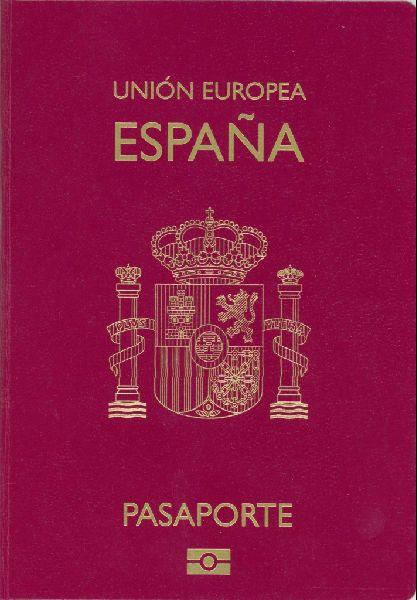
Here is what you can do:
- Check if you can get a British passport instead without the other parent’s involvement. Your child may in fact be British already. Many people do not realise that. If the other parent is British, your child is probably also British. Even if you are both foreign, your child may be British or can be British depending on your immigration status. It is worth getting advice from a specialist immigration solicitor. This could be worthwhile, not only if you want to travel soon but also for your child’s ability to stay in the UK post Brexit or in their own right once they are an adult.
- The problem is that the English courts do not have a specific order in statute law that provides for this because it is not an issue for British nationals. However, specific issue orders can be made. Another problem is that the English courts have no power to direct a foreign state what to do. So the Spanish consulate may ignore an order by an English court telling it to issue a passport. Therefore, it is vital for the consulate to confirm what exactly the order should say, preferably providing a wording. Since this is unlikely to be the first time the consulate in London has come across this, they should really know what wording they have accepted in the past. If not, they should think about it and have a pre-printed wording to hand to parents. If they are unresponsive or just direct the parent to a solicitor, we can suggest a draft or alternative drafts for them to approve.
- As with any court proceedings, the party against whom you make an application has a right to be heard. Therefore, you must send a copy of your application to the court to the other parent. If, as in this case, you do not know where the father is because he has not been around for several years, the court will still expect you to try to find him. The court would only allow you to go on with the application without the other parent knowing about it if you have done everything that is reasonable to try to find the other parent without success and can show the court.
- It may be possible that you can make an application in your home country to the court for an order in relation to this issue. This may be straightforward and cheap and may even bind the consulate to act. The jurisdictional issue is perhaps a bit uncertain here: Generally in the EU the courts of the country where the child is habitually resident have the power to make decisions about the child. However, if one regards this as a decision about the sovereign powers of the state to issue passports, it may be that the courts of the home country have powers to deal with the issue. It is worth checking this with a lawyer in your home country.
Posted in Children | Tagged Brexit children EU Jurisdiction passport
Equal time between Parents
I frequently get asked how children should share their time between their parents. More parents agree or demand from the other that they have equal time. I have seen numerous variations of how that is done in practice, for example:
- One week with each parent.
- 3 days with each parent in turn, or 4 days with each parent in turn.
- Week days in turn with each parent.
- Complicated schedules where over a two or three week period weekdays and weekends are evened out but there are frequent changes.
Any solution you agree must work for the children and must be practical depending on your work schedules. So alternate weekends make little sense to a parent who has to work every third weekend for example.
None of the above solutions seems satisfactory to me. A week with each parent means a child has to take all of their belongings and school kit with them each week and does not see the other parent for a long time. This may work where parents are still close and live close by and a child can nip over to the other house to get some stuff they may have forgotten, but could be a strain in other cases. All other suggestions seem very disruptive with children not knowing whether they are coming or going.
What seems to work for a lot of families, however, (assuming both parents work regular office hours or something close to that) is this system:
- Alternate weekends from Friday to either Sunday night or Monday to school/nursery. If this is to Monday that would be 3 nights in 14.
- The same weekdays with each parent in one chunk, i.e. Mondays and Tuesday with one and Wednesdays and Thursdays with the other parent. This means 2 nights a week or 4 nights a fortnight. Together with the weekends those are 7 nights a fortnight and exactly equal.
- Equal division of holidays.
The advantages of this system are:
- Weekends are alternating so parents can actually make plans and go away with the children overnight if they want, say to visit family or go to the seaside etc. Or they could just have a lie-in/pyjama morning lounging around of course.
- Most children have some after-school activities (sports or music lessons etc) and with this system the same activity will be with the same parent, e.g. “mum will always take me to football training on Tuesdays”. This also applies to the school timetable.
- Children seem to be able to remember which parent they have been with each weekend, so alternating weekends are a system they can follow. They also seem to be able to remember days of the week and so this system is something they can follow without having to consult a calendar or having an adult tell them. They can make plans, such as inviting a friend around to play (or for revision) Thursday next week without having to think where that would be or who they would need to ask.
- There are only two handovers each week and they can, if necessary be through the school or nursery so parents do not have to meet, which can help if this has been a problem in the past.
- A child will spend at most 2 nights plus a weekend (5 nights) with one parent, so is not away from the other for longer than that.
So it’s a system that’s easy to follow for children and allows whole weekends with each parent.
Even in cases where there is no insistence on equal division, this system can work in a modified form, i.e.
- Alternate weekends from Friday to Sunday night with each parent
- Thursday night with one parent, the rest with the other.
This means that each alternate weekend the child is with the other parent from Thursday to Sunday night. This system could later move to the one I described above in a way that seems very natural for the child.
Posted in Children | Tagged children contact equal time shared care
Other Parent Messing About on Child Contact
I have had several callers yesterday with essentially the same issue: the other parent is not agreeing to or not sticking to a clear schedule for time they spend with the child. In those cases I can either act for the parent, take detailed instructions and then correspond, all of which costs you money; or I can give generic advice. So I thought I would set out the basic generic advice here for everyone to read. Let’s take an anonymised example of a heterosexual couple where a young child, still a baby, lives with the mother. The same advice applies to same-sex couples, co-parents etc. The father will not agree to clear times, or although they have been agreed, does not turn up, or turns up at other times. He says that if the mother will not let him have contact on his terms, he will go to court. In any event, he will not pay maintenance if she won’t let him have his time with the child and he is entitled to 50/50 anyway.
Now, I only ever hear one side of the story, so there may be a lot more to it. However, there is a suspicion here that the father is using the contact and child maintenance as a way to exert power and coercive control, which is a form of abuse. It is often very difficult to prove that later in court because the abuser may come across as perfectly reasonable and claims that he is the one who has always made reasonable requests that have been unreasonably denied. Constant changing and arguing can also be grinding and stressful (and that may well be the intent). To avoid the stress and be able to have a case later in court if the matter comes to court, I advise the following:
- Communicate in writing (letter or email, but not texts, messenger etc.) about the proposals. Be clear and concise about what you suggest and why. Do not go into the history and make no reproaches; be practical and constructive. Suggest a contact regime that works for you, your child and that you think works for the father. Say that if it does not work for him, he tell you why it does not and can make alternative suggestions. Ask him to respond by email only. If he rings or texts etc. tell him you would prefer not to discuss this and that instead he should respond by email. This way, you can later if necessary show that you made reasonable suggestions early on.
- If you find it difficult to see if your proposals would work for him, ask a friend who is a parent of a child of similar age. Don’t be stingy when making your proposals, but do not be over-accommodating (e.g. there is no need to suggest that the father can use your home for contact if he is perfectly able to take the child to his home instead – this may be different if he lives 200 miles away).
- Consider any alternative proposals that he suggests and be prepared to accept them if they work; but give reasons if they do not work.
- Keep a diary (cheap paper diary, or an electronic document) which you update with all agreed contact and what times the father turns up, returns the child etc. You can also include any other issues, communication, telephone calls etc. in that diary. Just use bullet points and do not write whole pages of narrative. Such a record will give you the ability to show later on whether or not the father stuck to the agreement. I have often seen parents who claim they did, but could then be shown up. A paper version may look better with judges as a contemporaneous note, but if an electronic version works best for you, use that. Make sure you update it in real time and not a month later when you can hardly remember what happened. I would also use a document or diary which you do not use for anything else so that you can show a print out or copy to the other parent or the court.
- Ignore threats, in particular of “50/50 access” when that is practically fanciful (e.g. the father is not sticking to contact because in addition to his full-time job he is doing overtime).
- Be prepared to adjust the regime as the child gets older and their circumstances and needs change or if either of your circumstances and needs change (e.g. you stop breastfeeding regularly; the child starts swimming lessons etc.).
- If maintenance is not regularly paid by standing order at the rate it should be paid, write to ask for copies of his P60 and recent pay slips within 14 days. If you get them, use the online calculator to work out how much maintenance he should be paying. If it is not forthcoming, send a reminder with a clear deadline (say 7 days, taking account of any holidays etc.) and if that is not forthcoming make an application to the Child Maintenance Service. If you are able to calculate the rate and agree, insist it is paid by standing order each month the day after his salary comes in. If not, apply to the CMS.
These points should help in most cases. If you have any other ideas, tweet me.
Posted in Children | Tagged child arrangements coercive control contact
Surrogacy and Parental Order after Separation
A cohabiting couple had a child through surrogacy but separated during the pregnancy and the intended father no longer wanted to apply for a parental order.
In a recent case, anonymised as M v F & SM (Human Fertilisation and Embryology Act 2008) [2017] EWHC 2176 (Fam), a cohabiting different-sex couple where the woman could not carry the child found a friend to be their surrogate. Both the intended mother and the intended father were the genetic parents. However, during the pregnancy the couple separated and the intended father no longer wanted anything to do with the child and did not join the intended mother in the application for the parental order. The surrogate handed the child to the intended mother shortly after birth, but the intended mother could not on her own apply for a parental order alone because only couples can apply. The legal parents were the surrogate and the intended father (presumably the surrogate was single). To allow the intended mother to exercise parental responsibility on her own, the court made the child a ward of court and made other order regulating the upbringing until the law is changed (later in 2017 or in 2018) to allow single parents to apply for parental orders.
What does not seem to be discussed in this case is, however, that here a single woman is finding herself bringing up a baby without the help of her former partner (as they planned). Presumably while he is the legal father, she can apply to the CMS and the courts for child maintenance and financial provision. However, once a parental order is made, she will be the only legal parent and will have no financial help from the intended father.
This sits in contrast to a case where a couple undergo IVF, for instance, with donor sperm. Even if they split up during the pregnancy, the mother’s partner and legal father will be financially liable for the child even if he wants nothing more to do with the child. This is although he has no genetic connection with the child. This is of course the same as in any case where a woman gets naturally pregnant from a man even if that is a “one-night stand”.
In jurisdictions where a surrogacy agreement is binding and creates the legal paternity, both intended parents would be the legal parents from birth. In such a jurisdiction the mother in this case would have recourse to financial provision from the intended father. So while parental orders for single intended parents will be welcome, they still leave a mother like the one in this case financially vulnerable.
Posted in Children | Tagged parental order single parent Surrogacy
Breastfeeding for Co-Mothers
I have over the years had enquiries from several lesbian couples who were planning to attempt to conceive both at the same time to have children. One reason given was that they both wanted a close physical bond with a child. While most people who have had twins will say that the first three years are extremely hard, that is one choice for two women in a relationship to experience a close physical mother-child relationship.
Another way, which I had not thought of until I came across Breastfeeding Without Birthing by Alyssa Schnell, is for the co-mother (the mother who did not birth the child) in a same-sex female couple to co-nurse, whether or not she has a (full) milk supply.

I talked about Alyssa’s work in another blog post about intended mothers who have children through surrogacy and breastfeed them. In episode 15 of Breastfeeding Outside the Box podcasts, Alyssa talks to Rachel Gazda and Talana Keister about their experience of co-nursing their daughter as co-mothers. I love the options this creates for parenting, not least because I have in my practice come across a number of same-sex female couples where for medical reasons they choose for the younger partner to carry the children but the older was then the one who stopped gainful employment or went part time to care for the children.
Posted in Children Gay & Lesbian | Tagged Breastfeeding Co-mothers Lesbian mothers