

Lesbian Couple’s Children in a Gulf State Subject to English Court
A recent case (S (Children: Parentage and Jurisdiction) [2023] EWCA Civ 897) shows two interesting points, which are of far wider significance on lesbian paternity and international family law.
Two women had been civil partners in England and one of them gave birth to (it seems) four children. When the relationship broke down, the gestational mother moved to a Gulf State, they dissolved their civil partnership and both married other women. First the non-birth mother saw the children regularly, but the gestational mother then seems to have stopped that. The oldest child was in boarding school in England.
Two questions were decided by the Court of Appeal:
- Were both women legal parents of the children?
- Could the English Court decide on issues child arrangements?
While the oldest child had been born before a law change, the younger children were born after the Human Fertilisation and Embryology Act 2008 s. 42 came into force, which provides:
(1) If at the time of the placing in her of the embryo or the sperm and eggs or of her artificial insemination, W was a party to a civil partnership with another woman or a marriage with another woman, then […] the other party to the civil partnership or marriage is to be treated as a parent of the child unless it is shown that she did not consent to the placing in W of the embryo or the sperm and eggs or to her artificial insemination (as the case may be).

The appeal court decided that consent did not have to be a “deliberate exercise of choice”, but rather the presence or absence of consent may be inferred from the circumstances. Consent does not have to be “in writing or oral or unarticulated” and while “acquiescence …is not the same thing as consent”, “but the court will be careful to distinguish acquiescence from consent that has not been expressly stated.”
“The big picture here was that these were parties to a civil partnership who wanted children and created a family”; the court had accepted that the non-birth mother wanted children and “The judge’s conclusion that [the non-birth mother] merely acquiesced sits uneasily in the context of a relationship between cohabiting civil partners.”
This is significant as it gives more certainty to same-sex families and their children. The norm in cohabiting married couples or civil partners must be that if one of the women has a child, the other one is a legal parent of the child.
The second issue was whether the English Court could decide on the issues about the children. In this case the Gulf State in which (at least) the younger children lived did not recognise same-sex relationships and did not recognise parental rights of non-birth mothers. So they would not decide on any application by the non-birth mother for time with the children. The basic rule is that the courts where the children live have the power to make such decisions. This is also the basis in the 1996 Hague Convention. However, if no country has jurisdiction under those rules, the English court also have the power to make decisions in connection with continuing divorce and civil partnership dissolution proceedings in England. The question was whether this applied in the case where the civil partnership dissolution had been concluded more than 5 years earlier.
The court followed another recent case (Re T (Children) (Jurisdiction: Matrimonial Proceedings) [2023] EWCA Civ 285) and found that the English courts can continue to decide on child arrangements until they are 18 if the divorce or civil partnership dissolution as in England and Wales. This allows the English courts to look at child arrangements where the divorce or civil partnership dissolution was in England provided the country where the children live (broadly) is not a member of the 1996 Hague Convention. In cases where this could happen, that may be a good reason to have the divorce in England rather than elsewhere.
The practical effect for this non-birth mother is not entirely clear from the report. I suppose with the oldest son in boarding school in England the birth mother continues to travel to England and does not want to fall foul of a court order so will comply with an order made in England.
Posted in Children Gay & Lesbian International | Tagged children International Jurisdiction Lesbian mothers
Court order to allow one parent to apply for foreign passport
One parent can apply for a British passport for a child, but in many other countries both parents have to make the application. Often that includes personally coming to the appointment. For foreign parents living in the UK this can be a serious problem. I have had many such enquiries. Recently a mother contacted me (details anonymised):
My daughter is 6 years old and I am from Spain. The father has not been involved in her life for 5 years and I do not know where he is. The Spanish embassy says he needs to come to make the application for the passport or I need a court order. Can you help?
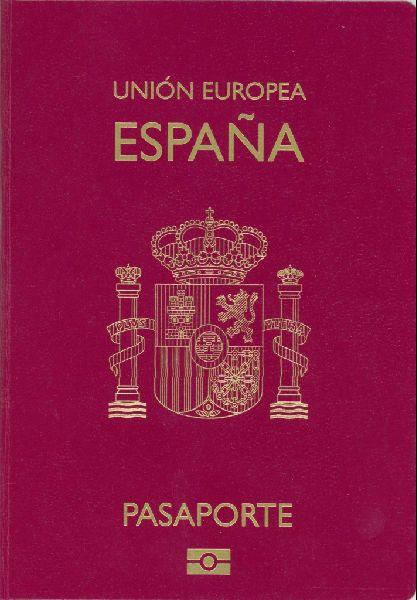
Here is what you can do:
- Check if you can get a British passport instead without the other parent’s involvement. Your child may in fact be British already. Many people do not realise that. If the other parent is British, your child is probably also British. Even if you are both foreign, your child may be British or can be British depending on your immigration status. It is worth getting advice from a specialist immigration solicitor. This could be worthwhile, not only if you want to travel soon but also for your child’s ability to stay in the UK post Brexit or in their own right once they are an adult.
- The problem is that the English courts do not have a specific order in statute law that provides for this because it is not an issue for British nationals. However, specific issue orders can be made. Another problem is that the English courts have no power to direct a foreign state what to do. So the Spanish consulate may ignore an order by an English court telling it to issue a passport. Therefore, it is vital for the consulate to confirm what exactly the order should say, preferably providing a wording. Since this is unlikely to be the first time the consulate in London has come across this, they should really know what wording they have accepted in the past. If not, they should think about it and have a pre-printed wording to hand to parents. If they are unresponsive or just direct the parent to a solicitor, we can suggest a draft or alternative drafts for them to approve.
- As with any court proceedings, the party against whom you make an application has a right to be heard. Therefore, you must send a copy of your application to the court to the other parent. If, as in this case, you do not know where the father is because he has not been around for several years, the court will still expect you to try to find him. The court would only allow you to go on with the application without the other parent knowing about it if you have done everything that is reasonable to try to find the other parent without success and can show the court.
- It may be possible that you can make an application in your home country to the court for an order in relation to this issue. This may be straightforward and cheap and may even bind the consulate to act. The jurisdictional issue is perhaps a bit uncertain here: Generally in the EU the courts of the country where the child is habitually resident have the power to make decisions about the child. However, if one regards this as a decision about the sovereign powers of the state to issue passports, it may be that the courts of the home country have powers to deal with the issue. It is worth checking this with a lawyer in your home country.
Posted in Children | Tagged Brexit children EU Jurisdiction passport
EU-Certificate for Divorce in England
A post in an online forum for Germans in London recently asked how to get the EU-Form after a divorce in England which the German authorities require. The poster was puzzled, as were the courts. Most family courts do not know about this, but can find out and will get the form signed by a judge and sealed if you fill it in.
The EU-Regulation about divorce jurisdiction and recognition, Regulation 2201/2003 has several forms in the Annexes, which – as the whole regulation – are of course available in all official EU languages. The idea is that you get a form sealed in one EU member state and anyone can then retrieve an empty form in their language, lay them side-by-side and check what each of the points say about the parties, date of divorce etc.
In England once you have a decree absolute, you will need to get the relevant form, which you can download and then send it to the family court where your divorce was pronounced and ask them to get it signed by a judge and sealed. I’d suggest to get at least 3 copies because you might need them for various official business. It is free and easy to get immediately after your divorce. It could be a lot more complicated when you need it 10 years later.
Posted in International | Tagged Divorce EU International Jurisdiction