

Surrogacy in US and Trump II
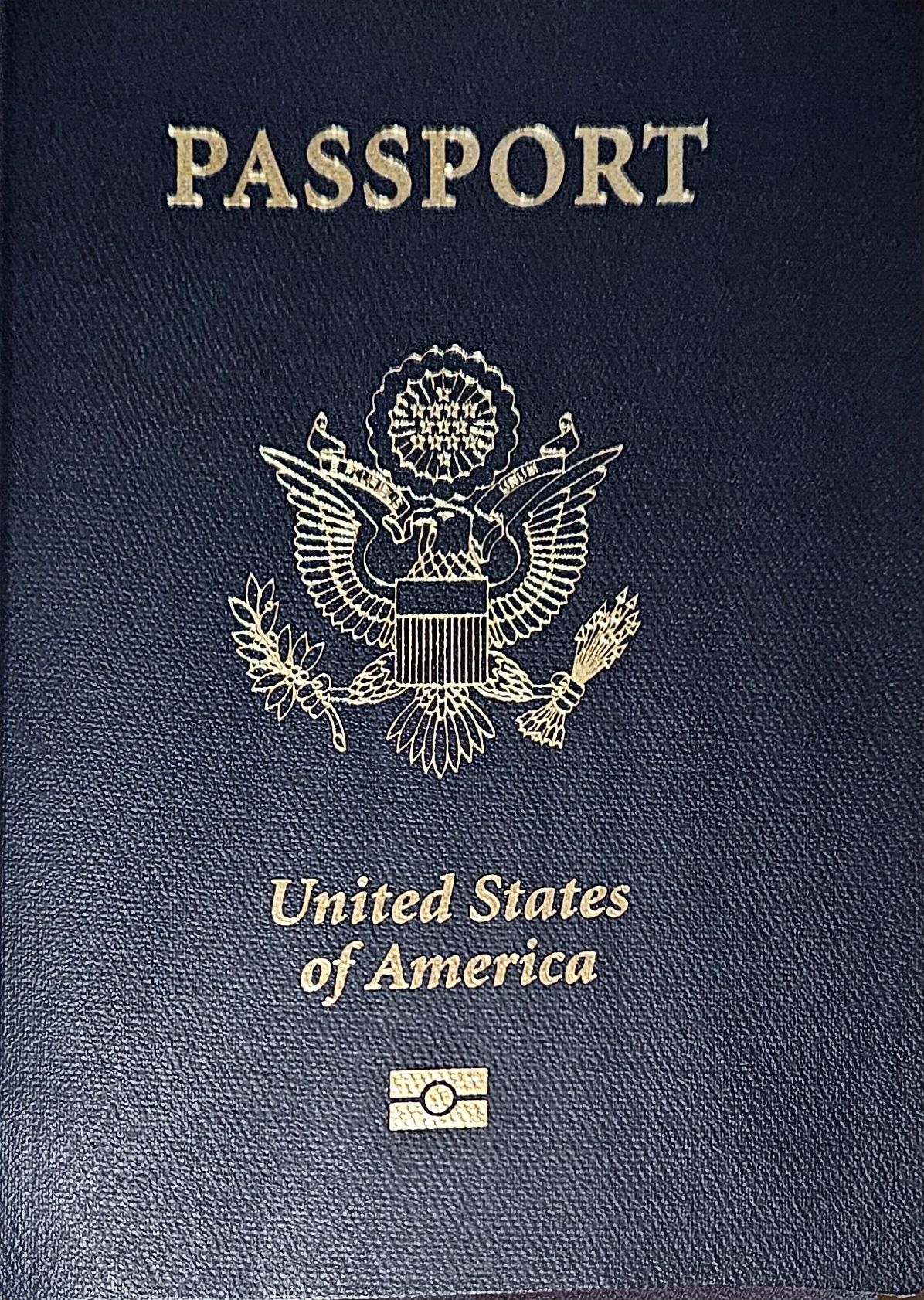
President Trump was inaugurated yesterday, 20 January 2025, for his second non-consecutive term and in a sweep of executive orders he also revoked birthright citizenship for future-born children of anyone whose parents do not have settled immigration rights, i.e. are in the US illegally or only as visitors. Does this affect children born to foreign intended parents in US surrogacy?
What does the order say?
The right of people born on US soil to US citizenship is found in the Fourteenth Amendment to the US constitution. Trump’s order seems to hang on the meaning of “subject to the jurisdiction” of the US. Trump tries to exclude two categories of persons:
“(1) when that person’s mother was unlawfully present in the United States and the person’s father was not a United States citizen or lawful permanent resident at the time of said person’s birth,” and
“(2) when that person’s mother’s presence in the United States was lawful but temporary, and the person’s father was not a United States citizen or lawful permanent resident at the time of said person’s birth.”
This would, therefore, mean that children born to parents who are in the US as visitors (as most intended parents are) are excluded from citizenship.
However, the definitions may help IPs because:
“(a) “Mother” means the immediate female biological progenitor.
(b) “Father” means the immediate male biological progenitor.”
This while the surrogate may not be the legal mother due to a pre-birth or post-birth order, she might still be classed as the mother under the order. The definition is not clear because most children born to surrogates have an egg-donor and a surrogate, thus two female progenitors. Could “immediate” refer to the surrogate and exclude the egg-donor? This would in particular be important if the foreign intended mother’s eggs are used in the surrogacy.
Will this order hold up?
The order has been made and is likely to be challenged in the courts. The US Supreme Court seems to have decided the issue as long ago as 1898 in a case called United States v. Wong Kim Ark where a man born in San Francisco to Chinese immigrants was held to be a US Citizen. The court held that “subject to the jurisdiction” excluded only those who were born to foreign rulers or diplomats, born on foreign public ships, or born to enemy forces engaged in hostile occupation of the country’s territory (as well as native tribes, which was later dealt with by legislation).
What should IPs do?
The order takes effect for births 30 days after it was made, so 19 February 2025. Some precautions are probably wise, including:
- Getting confirmation of the surrogate’s citizenship including a certified copy of her passport or other proof of citizenship;
- Including in the contract with the surrogate that she confirms her citizenship and will cooperate with any requirements by authorities to prove that so that the IPs can apply for US citizenship for the child;
- Including a similar clause in the egg-donor agreement in case “immediate female biological progenitor” is given a wider interpretation;
- Obtaining proof that the surrogate gave birth and is therefore the “immediate female biological progenitor”, such as hospital records;
- Asking the US passport office local to the place of birth in advance what evidence they may require, e.g. from the surrogate;
- Get advice from your US attorney and see if the pre- or post-birth order should be re-worded to include that for the purposes of any application for US citizenship the surrogate is declared as the “immediate female biological progenitor”.
More will be known in weeks to come. In the meantime, advice from a specialist US attorney is vital.
Posted in Children International | Tagged children International Surrogacy
Beware of Murky Surrogacy Arrangements
A gay couple living in England had engaged “SurrogateBaby” as an agency to have a child through surrogacy. According to the English judge, Mrs Justice Theis, they had at best been naïve about the process. The contract for this international surrogacy was unclear in a lot of areas and they were lucky to have avoided a total disaster. They could have got stuck in a third country with their baby daughter, being bankrupted by neonatal medical bills or worse not been able to have her at all.
While the judgment was almost entirely anonymised, it did name the agency. This agency has a live website and social media presence. It seems to be run by a Russian man and from the judgement the surrogate came from and lived during the surrogacy in a country where “due to the ongoing war” she could not deliver the baby in 2023. This is likely to have been Ukraine or Russia. She then gave birth in a third country and the intended parents were charged extra for this. Surrogacy for same-sex couples is illegal in that country. “SurrogateBaby” is now located in Georgia and this country would fit the description. The fertility treatment took place in the (internationally unrecognised territory of the) Turkish Republic of Northern Cyprus, which is not part of the EU (contrary to the Southern, Greek part of Cyprus).
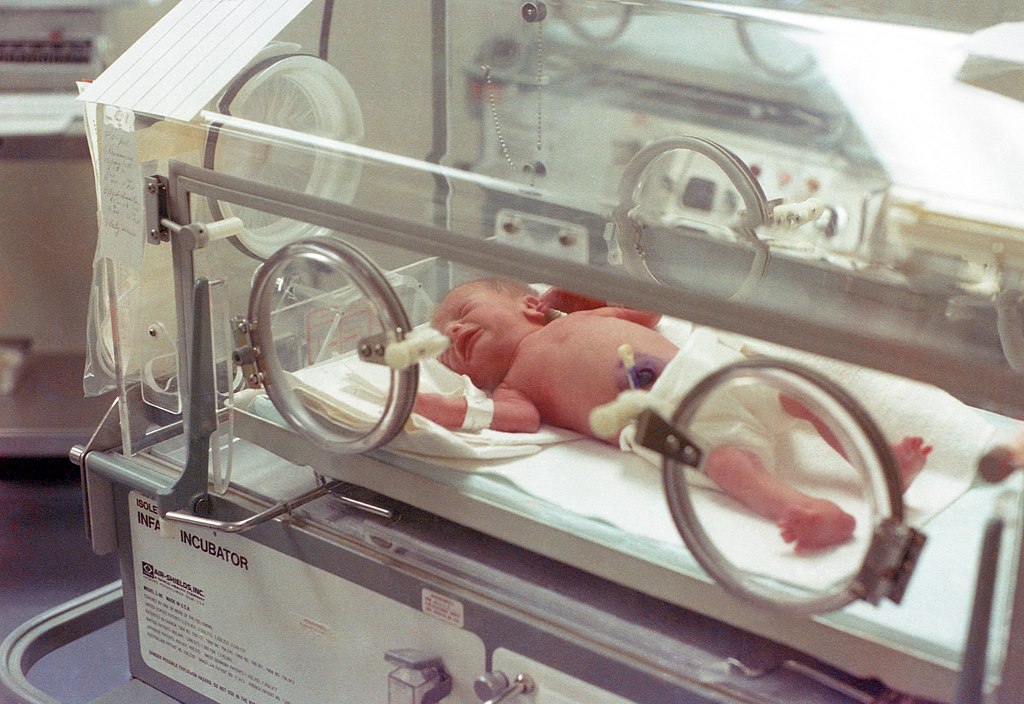
The added complication in this particular case was that neither of the intended fathers was a British Citizen. They were both citizens of two different countries where homosexuality was illegal.
They contacted “SurrogateBaby” who told them they were based in “Cyprus”, but it later turned out their head office was elsewhere. The contract provided that the “carrying and childbirth will be carried out in a European Union (EU) country” (northern Cyprus is not an EU country). There is no indication that the country where the surrogate ultimately gave birth in was an EU country. Neither Ukraine nor Russia is in the EU. Even this would not have helped the intended fathers because the laws in the EU about surrogacy vary from full criminalisation (Italy), via situations where there is no criminal sanction for intended parents (Germany) to those where at least altruistic surrogacy is legal in certain circumstances (Netherlands, Denmark). Nor does a birth in the EU make travel to the UK any easier. Health coverage might possibly be under the NHS GHIC scheme in the EU, but it would make no difference to travel.
In the event, the intended fathers were told that the surrogate was to give birth in yet another country where gay couples were not recognised as fathers under surrogacy and so one of them had to pretend he had had a child with his girlfriend. He then had to apply for a passport from his country of origin (where homosexuality is illegal) for his daughter, travel there with her and apply for a UK visa from there for his daughter before being able to come to the UK half a year later. It turned out the surrogate had had no idea she was carrying for a gay couple, but was supportive and agreed to a parental order. The court considered the parental order application, which was granted.
This case shows that intended parents should always conduct due diligence on the proposed surrogacy, especially if it is not clear which countries are involved. In this case there were at least six different jurisdictions:
- The first intended father’s home country, where homosexuality is illegal.
- The second intended father’s home country, where homosexuality is illegal.
- The UK where they applied for a parental order, but where neither was a citizen.
- The surrogate’s home country (and the country where the address of the surrogacy agency “SurrogateBaby” was, where surrogacy for gay couples was illegal.
- Northern Cyprus, an unrecognised country outside the EU, where the fertility treatment took place.
- The country where the surrogate gave birth, where surrogacy for gay couples is illegal.
The fathers should have made enquiries and obtained legal advice before embarking on this surrogacy journey to find out the legal situation in each of these countries. A lot more than did go wrong could have gone wrong in this case, for example:
- The surrogate may have given birth in her home country prematurely. Neither the legal situation for the baby’s parentage nor the question of health cover for the baby are clear and the fathers may have had to fund neonatal intensive care out of their own pockets.
- The baby may have required expensive hospital care in the country she was ultimately born in. Nothing was said or clear about how that would be funded and the fathers could have been stuck with a hefty bill.
- The home country of the genetic father may not have provided him with a passport for his daughter, in particular if they found out he was gay. This could have meant that the baby would have been stuck in the country of her birth.
- The father’s home country could have arrested him for his homosexuality while he was there with his daughter and taken her in to care with no other parent in the country.
- The English court might not have granted the parental order application if they thought the fathers had not acted in good faith. In this case the judge had some doubts, but did make the order in the end. If she had decided otherwise, the second father’s relationship with his daughter would not have been recognised.
- The surrogate may not have agreed to all or some of these arrangements. We know she was not told that she was carrying for a gay couple. The intended parents had no guarantee she was consenting to any of the arrangement. They had not met her and had no direct contract with her. There could have been criminal charges for trafficking because she was brought across international borders for the fertility treatment and to give birth.
Overall, this case should be a warning to any intended parents to do their homework. If the offer looks too good to be true, it probably is.
The case is reported here: Re Z [2024] EWFC 304
Posted in International | Tagged children International Surrogacy
Surrogacy in US and Trump
Trump has pledged to overturn the right of children born in the US to automatic US citizenship. What does this mean for surrogacy in the US?
Trump changed the majorities in the US Supreme Court in his first term and when previously it was balanced, there is now a conservative 6:3 majority. In Dobbs v. Jackson Women’s Health Organization (2022) this led to the overturning of Rowe v Wade, the case which legalised abortion across the US. As a result there is now a hotchpotch of state laws some banning abortion outright and some which might even apply to foetuses in the lab. Intended Parents (IPs) in surrogacy journeys in the US will need to consider the state where their surrogate lives carefully to ensure that she has access to full reproductive rights in case of a miscarriage or other event when continuing the pregnancy is not the preferred option of all involved.
Before his re-election Trump pledged to overturn the US constitutional right of children born on US soil to US citizenship. This is not expected to be retrospective and could simply be done by presidential decree or a new law which restricts the birthright to children born on US soil where at least one parent is a US citizen or legally resident in the US.
This would probably also affect international surrogacy journeys in the US because in most states the IPs are the legal parents from birth, whether through a pre-birth or post-birth order. Many IPs currently rely on their child born in the US through surrogacy being able to get a US passport swiftly and travel home with it before taking sometimes a long legal journey to sort out their parental status and therefore the child’s citizenship by descent back home. In the UK this is by way of a parental order.
While the new law is not expected to apply retroactively, it could come in just before transfer or even while the surrogate is already pregnant and apply to the newborn.
If you have started your surrogacy journey in the US, this could apply to you. I suggest all foreign IPs should get advice from immigration solicitors back home to ensure they don’t get stuck in the US with neither the US nor their country’s authorities giving the child a passport (at all or soon).
As far as I understand, UK citizen IPs can get travel documents although parentage is not recognised in family law but the application is sent back to the UK and it can take weeks or months before the child gets British a passport. This could mean the family will have to stay in the US, adding to their overall costs. It would help if the surrogate was unmarried because then at least there is legal parentage through a genetic father (and the surrogate’s spouse is not automatically the second parent). British IPs could also consider any new law carefully and see if it applies to them or if they could apply for a type of visa to the US which would give their child US citizenship automatically (rather than travel on the visa waiver programme) if they are entitled to it.
While any such law might be unconstitutional, this is ultimately a matter for the courts and the US Supreme Court. Legal arguments do not help IPs who are told by the US Passport Agency that they cannot get a US passport for their newborn. So unless the courts suspend the new law pending a constitutional challenge, this could take years to sort out and meanwhile many new families could spend an unwelcome costly few months in the US waiting for a British (or other) passport.
Posted in Children | Tagged children International Surrogacy
Surrogacy and Parental Order after Separation
A cohabiting couple had a child through surrogacy but separated during the pregnancy and the intended father no longer wanted to apply for a parental order.
In a recent case, anonymised as M v F & SM (Human Fertilisation and Embryology Act 2008) [2017] EWHC 2176 (Fam), a cohabiting different-sex couple where the woman could not carry the child found a friend to be their surrogate. Both the intended mother and the intended father were the genetic parents. However, during the pregnancy the couple separated and the intended father no longer wanted anything to do with the child and did not join the intended mother in the application for the parental order. The surrogate handed the child to the intended mother shortly after birth, but the intended mother could not on her own apply for a parental order alone because only couples can apply. The legal parents were the surrogate and the intended father (presumably the surrogate was single). To allow the intended mother to exercise parental responsibility on her own, the court made the child a ward of court and made other order regulating the upbringing until the law is changed (later in 2017 or in 2018) to allow single parents to apply for parental orders.
What does not seem to be discussed in this case is, however, that here a single woman is finding herself bringing up a baby without the help of her former partner (as they planned). Presumably while he is the legal father, she can apply to the CMS and the courts for child maintenance and financial provision. However, once a parental order is made, she will be the only legal parent and will have no financial help from the intended father.
This sits in contrast to a case where a couple undergo IVF, for instance, with donor sperm. Even if they split up during the pregnancy, the mother’s partner and legal father will be financially liable for the child even if he wants nothing more to do with the child. This is although he has no genetic connection with the child. This is of course the same as in any case where a woman gets naturally pregnant from a man even if that is a “one-night stand”.
In jurisdictions where a surrogacy agreement is binding and creates the legal paternity, both intended parents would be the legal parents from birth. In such a jurisdiction the mother in this case would have recourse to financial provision from the intended father. So while parental orders for single intended parents will be welcome, they still leave a mother like the one in this case financially vulnerable.
Posted in Children | Tagged parental order single parent Surrogacy
Breastfeeding After Surrogacy
I was not aware that women could breastfeed without giving birth until I came across Alyssa Schnell’s book Breastfeeding Without Birthing. The book is available in the UK on Amazon. Alyssa describes how any woman can try to induce lactation (through breastfeeding, manual stimulation, pumping and/or herbs and medication) and breastfeed a baby. Not every woman will produce the full amount of milk a baby needs, but Alyssa encourages breastfeeding for the benefit of nursing and the bond it creates irrespective of the milk supply produced. She gives tips and instructions how to supplement the breast milk supply. The book is full of practical tips and instructions. Alyssa is an International Board Certified Lactation Consultant (IBCLC) working in St Louis, Missouri, USA. She induced lactation when she adopted her daughter after earlier having given birth to her elder children.
This book is now accompanied by a series of podcasts Breastfeeding Outside the Box where Alyssa Schnell and Hope Lien talk about the experiences of different parents who breastfeed their children other than in the obvious conventional way, including those who have breastfed without birthing. Hope is a lactation counsellor, also in the US, and between them they are putting together a series of interesting episodes.
What is interesting for the work I do is that women who adopt a child or have a child through surrogacy can in fact breastfeed their child if they choose to do so. Not only is this a way to provide the baby with breast milk, which the WHO recommends as the healthier way to feed a child (as opposed to processed formula), but it can also deepen the physical bond between intended mother and child. In episode 13 of the podcasts Hope talks to an intended mother who breastfeeds her child through surrogacy.
The book and the podcasts also deal with relactation or inducing lactation to nurse an older baby, so it is not too late to think about nursing even if you did not think about this before the birth. Find the Breastfeeding Outside the Box podcasts on your podcast app, download them and listen to them when you drive or in the gym or on the tube. I highly recommend them!
Posted in Children | Tagged Breastfeeding Surrogacy